

4 min read
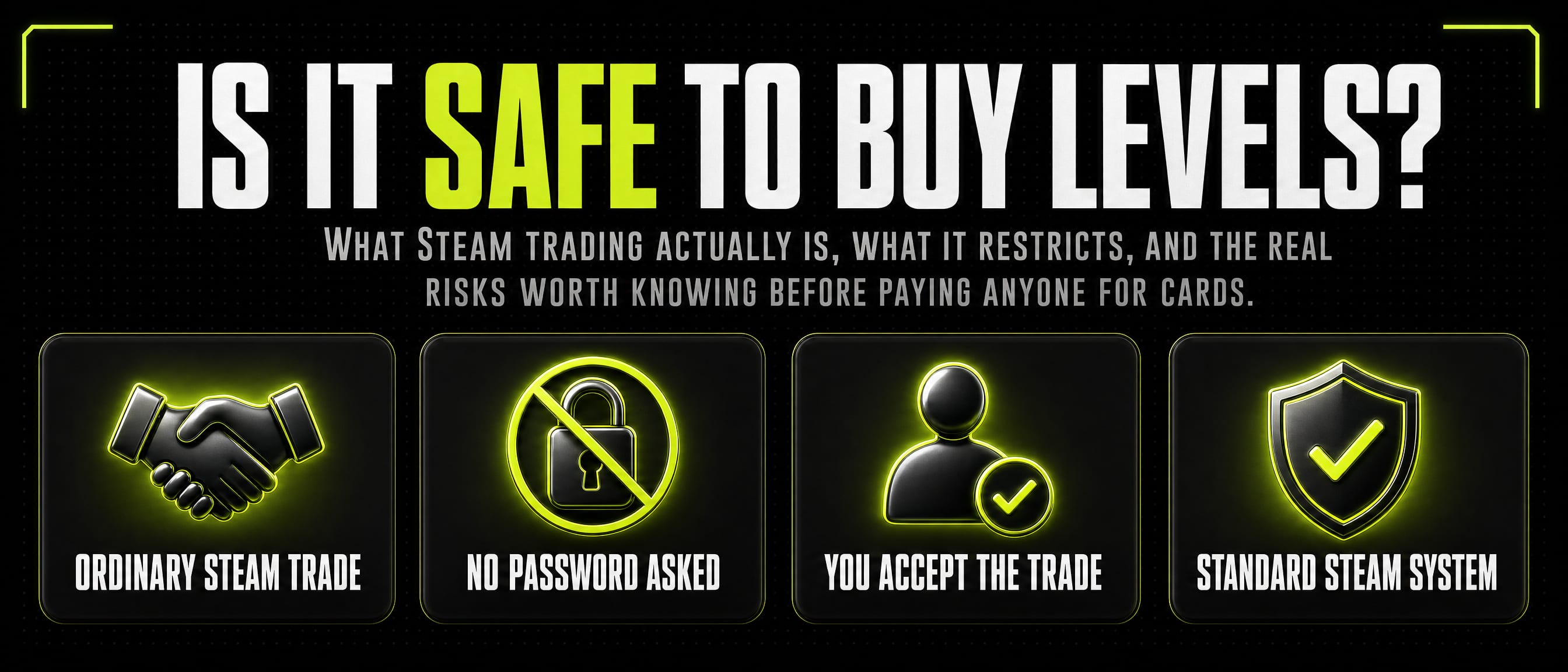
Is buying Steam levels safe? Is it against the rules?
What Steam trading actually is, what it restricts, and the real risks worth knowing before paying anyone for card sets.
Trading cards is a built-in Steam feature
Trading cards exist to be traded. Valve built the market and the trade offer system specifically so items, including cards, can change hands between accounts. Paying someone for a card set uses that same system, not a workaround of it.
Check Steam's own trading pages if in doubt: nothing there singles out card sets or restricts what a trade is for.
What Steam actually restricts
Steam's rules are aimed at scams, stolen items and account takeovers, things like fake trade sites, phishing for login details, or trading items that were bought with a stolen card. A normal trade offer between two accounts, for cards, is exactly the mechanism the trading system exists for.
A trade-banned or VAC-banned account can be blocked from trading, but that ban comes from the reason behind it, never from having bought or sold cards.
The real risk is not a ban, it is your account
The actual things worth being careful about: never give out a Steam password to anyone, a trade URL only lets someone send a trade offer and cannot sign into an account, and Steam Guard Mobile Authenticator should be on before any trade so it does not sit in escrow for days.
Anyone asking for a password, or for you to log in on a site that is not steamcommunity.com, is the actual red flag, not the trade itself.
What a legitimate delivery looks like
A real trade offer shows up inside Steam itself, from a Steam account, asking for nothing but the items agreed on. It never asks for a password, a Steam Guard code typed anywhere but Steam, or a login on another website.
Sources
Ready to see a price?